If you have an old or collectible coin, its age is only part of the story. Condition can make a major difference in a coin’s numismatic value, which is why coin collectors and dealers use standardized grading systems to evaluate collectible coins.
One of the most widely recognized systems is the Sheldon Coin Grading Scale, a 1-to-70 scale used to describe the condition of coins. Understanding how the scale works can help you better understand the potential value of coins in your collection.
What Is the Sheldon Coin Grading Scale?
Courtesy of 加拿大皇家鑄幣局.
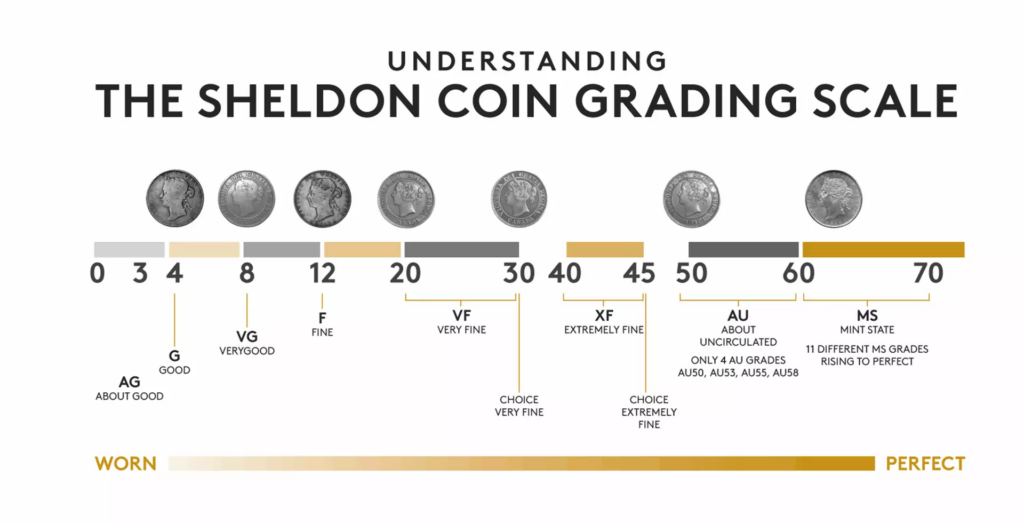
The Sheldon Coin Grading Scale assigns coins a grade from 1 to 70, with 1 representing a coin in very poor condition and 70 representing a virtually perfect coin.
The system was developed by American numismatist Dr. William Herbert Sheldon for early American large cents. His goal was to create a consistent way to describe a coin’s condition and relate it to its market value. The system was later adapted for other coins and became the foundation of modern coin grading.
Here is an overview of the grading scale:
- Poor (PO-1): The coin is heavily worn, with only enough detail remaining to identify the type and date.
- Fair (FR-2): More detail is visible than on a PO-1 coin, but the coin remains heavily worn.
- About Good (AG-3): Major design features are visible, although the coin has extensive wear.
- Good (G): Significant wear is present, but the major features of the coin remain identifiable. Good coins are graded from G-4 to G-6.
- Very Good (VG): The coin has considerable wear, but more design detail remains visible. These coins are graded from VG-8 to VG-10.
- Fine (F): Moderate wear is present, with the major design elements clearly visible. Fine coins are graded from F-12 to F-15.
- Very Fine (VF): Moderate wear is present, while most of the important details remain clear. VF coins are graded from VF-20 to VF-35.
- Extremely Fine (XF or EF): The coin shows light wear, generally on the highest points of the design. These coins are graded from XF-40 to XF-45.
- About Uncirculated (AU): The coin has very little wear and retains much of its original appearance. These coins are graded from AU-50 to AU-58.
- Mint State (MS): The coin shows no circulation wear. Mint State coins are graded from MS-60 through MS-70.
The higher the grade, the better preserved the coin generally is. However, a higher grade doesn’t automatically mean a coin is more valuable.
Learning How to Grade Coins
Learning to grade coins takes practice, and resources such as the Charlton Standard Catalogue of Canadian Coins can help. Charlton catalogues provide detailed descriptions and illustrations for evaluating the condition of specific Canadian coins.
This is particularly useful because grading characteristics can vary between different coins. Guides may identify specific areas of a design to examine and explain how much detail should remain at different grades. For example, Canadian coins from the reigns of Queen Victoria, King Edward VII 和 other monarchs can have specific grading considerations based on their individual designs.
Using a detailed reference alongside the Sheldon scale can help collectors become more familiar with grading and evaluate their own coins. However, grading coins can be subjective, and professional grading may be worthwhile when the condition of a coin could significantly affect its value.
How Does Coin Grading Affect Value?
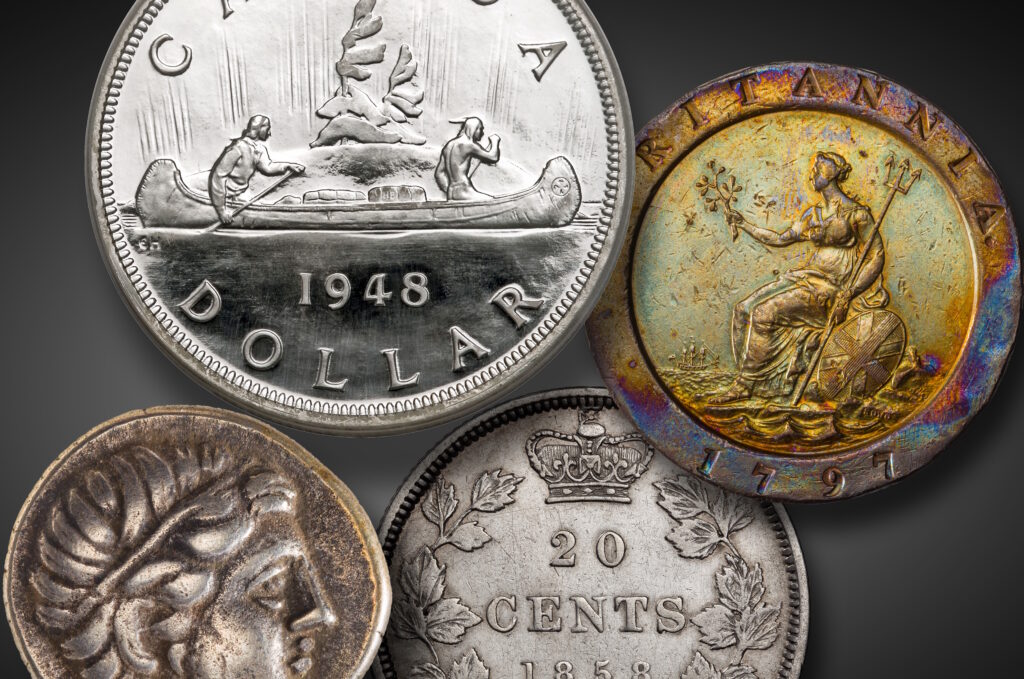
Coin grading is an important factor in determining the value of numismatic coins, but it is not the only one.
Two coins from the same year and mint can have very different values if one is better preserved. For rare or highly sought-after coins, even a small difference in grade can significantly affect value.
Grading considers factors such as wear, surface marks, lustre, strike quality 和 overall preservation. How a coin was originally struck by the mint can also affect its grade.
Coins produced for everyday circulation, known as business strikes, are made for mass production and handled throughout the minting and distribution process. Even coins that were never circulated can have production or handling marks that prevent them from receiving the highest grades.
The highest Mint State grades are more commonly found among coins deliberately produced and handled for collectors or removed from production before entering circulation. An MS-70 represents an exceptionally well-preserved coin with no post-production imperfections visible under 5× magnification.
At the same time, rarity and collector demand are critical to a coin’s value. A common coin in a high grade may be worth less than a rare coin in a lower grade. Date, mint mark, varieties, errors 和 historical significance can all affect the market value of a collectible coin.
Who Grades Numismatic Coins?
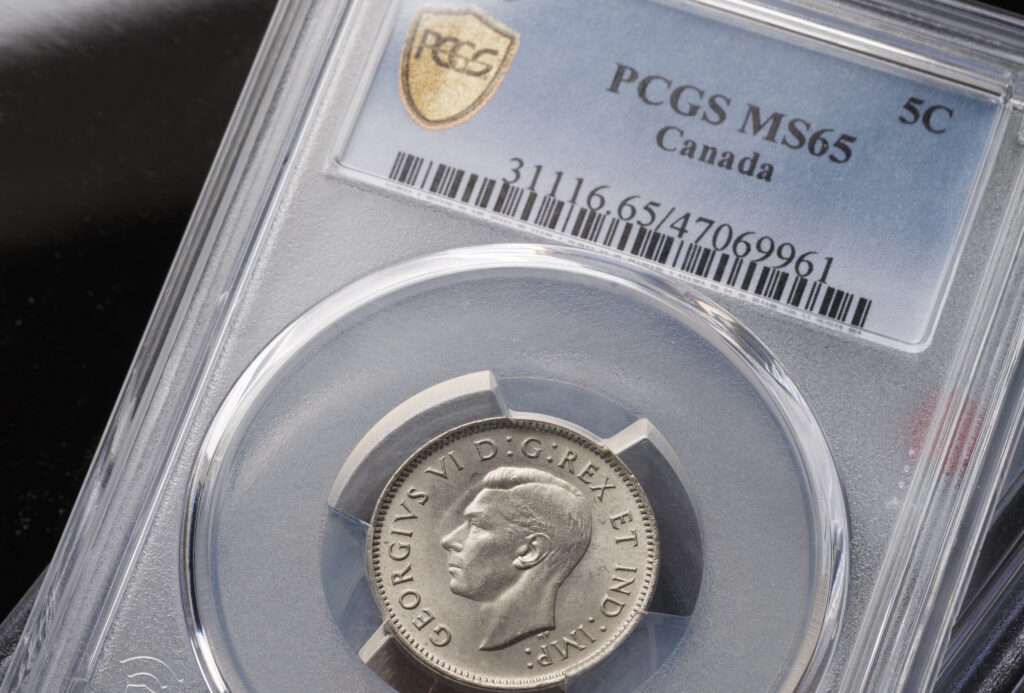
While collectors can learn to grade coins themselves, valuable or particularly rare coins are often submitted to professional grading companies for authentication and grading.
Recognized organizations such as NGC (Numismatic Guaranty Company) 和 PCGS (Professional Coin Grading Service) use the Sheldon 1-to-70 grading scale. Professionally graded coins are generally sealed in protective holders with their grade and certification information, giving collectors a standardized way to identify and compare coins.
Does Your Coin Have Numismatic Value?
If you have a collection of old Canadian coins, don’t assume that a coin’s value is based solely on its age or precious metal content. Numismatic coins can be worth more than their metal value because of their rarity, condition, historical importance 和 collector demand.
If you’re curious about the coins you own, contact your local Canada Gold location to ask whether they have a numismatic specialist. You can bring your collection in and learn more about your coins and the factors that may affect their value.
If you’re interested in purchasing numismatic coins, our sister company, Canadian Coin & Currency, offers a selection of collectible coins and banknotes. Their coins are graded by recognized coin grading institutions using the Sheldon Coin Grading Scale, providing collectors with information about their condition.
Whether you’re exploring an inherited collection, learning more about an old Canadian coin or expanding your collection, understanding coin grading can help you better appreciate the history, rarity 和 價值 of numismatic coins.